
The Castle That Laughed at Mount Etna (The Full Story of Castello Ursino)
Built by an emperor. Attacked by kings. Buried by earthquakes. And still standing. Here is the incredible 800-year history of Catania's most stubborn building.
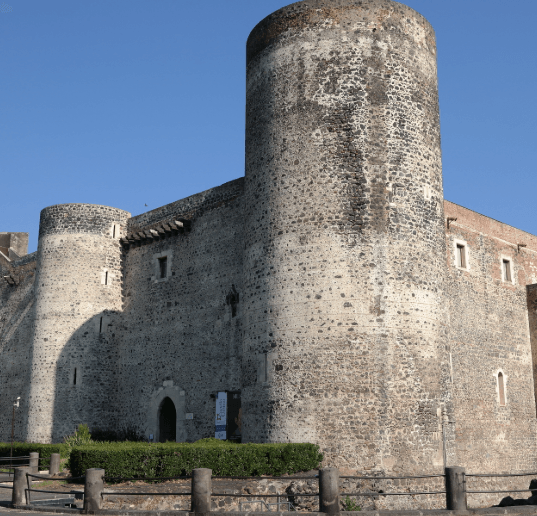
I want to tell you about a building that should not exist.
In 1693, a catastrophic earthquake flattened Catania. The ground shook for four minutes. Buildings collapsed like they were made of cards. Fifteen thousand people died.
Then Mount Etna erupted. Lava flowed through the streets. The city was destroyed twice in one year.
But when the dust settled and the ash cooled, one building was still standing.
Castello Ursino.
Not just standing. Barely scratched. While everything around it turned to rubble, this medieval fortress sat there like it was yawning through a minor inconvenience.
That is not luck. That is engineering. That is spite in architectural form. And that is why you need to know this castle's story.
The Emperor Who Built It (And Why)
Frederick II was not a man who did things halfway.
Born in 1194, he was Holy Roman Emperor, King of Sicily, King of Germany, King of Italy, and King of Jerusalem. He spoke six languages. He wrote poetry. He kept a zoo. He was called Stupor Mundi — the Wonder of the World.
And he was paranoid as hell.
Frederick spent his life fighting the Pope. Literally. The Pope excommunicated him three times. At one point, the Pope called him the Antichrist. Frederick responded by conquering Jerusalem (which, ironically, made the Pope even angrier).
By the 1230s, Frederick needed a fortress in eastern Sicily. Not just any fortress. He needed a statement. A building that said: I am here. I am powerful. And I am not going anywhere.
He chose Catania. Not because it was safe — it was directly in the shadow of Mount Etna — but because it was strategic. Control Catania, and you controlled the eastern coast of Sicily. You controlled trade routes. You controlled access to the island's interior.
Construction began around 1239. Frederick brought in his best architects. His best stonemasons. His best engineers. And he gave them a simple brief: Build something that will outlast me.
How They Built a Fortress to Defy Time
The first thing you need to understand about Castello Ursino is the material.
Lava stone.
Not just any lava stone. The builders used grey basalt from Mount Etna itself. This is some of the hardest, densest stone on Earth. It is volcanic rock forged in fire and pressure. It does not crack. It does not crumble. It laughs at weather.
The walls are three meters thick in places. Not thick like modern concrete — thick like you could fire a cannon at this and it would shrug. The corners are reinforced. The foundations go deep into the bedrock.
The design is deceptively simple. Four massive towers at the corners. A central courtyard. Narrow windows that function as arrow slits. A single main entrance that could be defended by a handful of soldiers against an army.
But here is the genius: the castle has no decorative flourishes. No fancy turrets. No delicate stonework. Frederick was not building a palace. He was building a bunker. And every design choice reflects that single-minded purpose.
The towers are squat and solid. The walls slope slightly inward as they rise, making them harder to scale. The roof is flat, designed for archers and, if necessary, artillery. Even the drainage system is integrated into the walls, so attackers could not poison the water supply.
This was military architecture at its most brutal and efficient.
The Castle That Survived Everything
Castello Ursino was finished around 1250. Frederick died that same year. He never saw his fortress tested in battle. But it would be. Oh, it would be.
Over the next five centuries, the castle was besieged, attacked, occupied, and repurposed more times than anyone can count. French kings. Spanish viceroys. Rebel barons. Each left their mark. Each failed to destroy it.
In 1296, the castle was besieged during the War of the Sicilian Vespers. The attackers had cannons — relatively new technology at the time. They fired for days. The walls held.
In the 1500s, Spanish viceroys turned the castle into a palace. They added windows (which the original designers would have hated). They built living quarters in the courtyard. They tried to soften the building's military character.
But the structure itself? Untouched. Unbreakable.
Then came 1693.
January 11th. 9:00 PM. The ground began to shake. And it did not stop.
Contemporary accounts describe a sound like thunder. The earth opened in places. Buildings collapsed into the fissures. The shaking lasted four minutes — an eternity when the world is ending.
When it stopped, Catania was gone. Sixty thousand people dead across southeastern Sicily. The city that had stood for millennia was rubble.
But Castello Ursino?
It had some cracks. Some fallen plaster. A few broken windows.
That was it.
Three months later, Mount Etna erupted. Lava flowed toward the city. The castle was partially buried — you can still see the lava stone around the base today.
But the building itself? Still standing. Still solid. Still defiant.
The Irony of Survival
Here is the funny thing about Castello Ursino.
Frederick built it as a coastal fortress. It was supposed to defend Catania from sea attacks. The walls faced the water. The design assumed enemies would come from the east.
But the 1693 earthquake changed the coastline. The ground shifted. The sea retreated. Today, Castello Ursino sits a kilometer inland — a coastal fortress with no coast.
It is surrounded by baroque buildings constructed after the earthquake. The city rebuilt itself in a new style, leaving this medieval monster sitting in their midst like a visitor from another time.
And that is what makes it so fascinating. It is completely out of place. Completely anachronistic. Completely unbothered by any of it.
Inside the Beast: What You Will Find Today
Today, Castello Ursino houses the Civic Museum of Catania. And the contrast is perfect — delicate art inside indestructible walls.
The collections are genuinely impressive. Greek and Roman sculptures pulled from the ruins of ancient Catania. Medieval religious paintings. The famous Biscari collection — ancient artifacts gathered by a local noble family obsessed with history.
My favorite piece is a Greek bronze statue of a warrior. Over 2,000 years old. Found buried in a field nearby. He stands there in his bronze armor, looking ready for battle, while the castle around him has already survived more battles than he ever fought.
There are ceramics from every era of Sicilian history. Carved sarcophagi. Ancient coins. Weapons. Tools. Everyday objects that remind you people lived here. Loved here. Died here. For thousands of years.
And through every window, you see the contrast. The rough lava stone walls. The delicate baroque city beyond. The castle refusing to blend in, refusing to be anything other than what it is: a survivor.
The Practical Stuff (Because You Should Actually Visit)
Location: Piazza Federico di Svevia. Easy 10-minute walk from Piazza Duomo. You cannot miss it — it looks like it is waiting for a siege that will never come.
Hours: Daily 9:00 AM to 7:00 PM. Last entry at 6:00 PM.
Tickets: About €6. Discounts for students, seniors, and EU citizens under 25. Worth every cent.
Time needed: At least 90 minutes if you are actually looking at things. Two hours if you want to sit in the courtyard and contemplate existence (recommended).
Pro tips:
• Start with the courtyard. Feel the weight of the walls. Imagine 800 years of history.
• Look for the lava stone at the base — that is from the 1693 eruption. The castle wore it like a badge.
• Find the arrow slits in the towers. Stand in them. Look out at the modern city. Time travel.
• The museum is great, but the building itself is the real exhibit.
Why This Castle Matters
I have seen a lot of old buildings. Castles. Palaces. Fortresses. Most of them feel like museum pieces. Carefully preserved. Delicately maintained. Kept alive by modern intervention.
Castello Ursino is different.
It does not need preservation. It does not need help. It just... is. It survived because it was built to survive. It stands because it refuses to fall.
In a city that has been destroyed and rebuilt more times than anyone can count, this building is the constant. The survivor. The stubborn reminder that sometimes, humans build things that outlast empires.
Frederick II wanted a fortress that would outlast him. He got one that outlasted kingdoms, earthquakes, volcanic eruptions, and centuries of history.
That is worth seeing. That is worth understanding. That is worth remembering. |
Stay up to date with our local news!
Get articles like this delivered to your inbox.
Subscribe Now
May 26, 2026
"Catania Transforms into Pop-Culture Paradise: A Mecca for Fans of All Things Trendy!"
Unleash excitement as Catania transforms into a hub for pop-culture lovers.

May 26, 2026
"Catania's Long-Neglected Beauty Getting Multi-Million Euro Facelift"
Unveiling Catania's Historic Transformation: The Revival of an Iconic Workhorse.

May 23, 2026
"Spring Celebration in Aci Trezza: A Blissful Sunday by the Sea"
Discover the charm of Festa di Primavera in Aci Trezza - a delightful seaside celebration like no other.

May 23, 2026
Nivarata Festival 2026: Celebrate Sicilian Granita in Acireale
Experience the Nivarata Festival in Acireale from May 22-24, 2026, celebrating Sicilian granita with tastings, workshops, and cultural events.
0 Comments
Join the conversation
Be the first to comment
Share your thoughts above.